
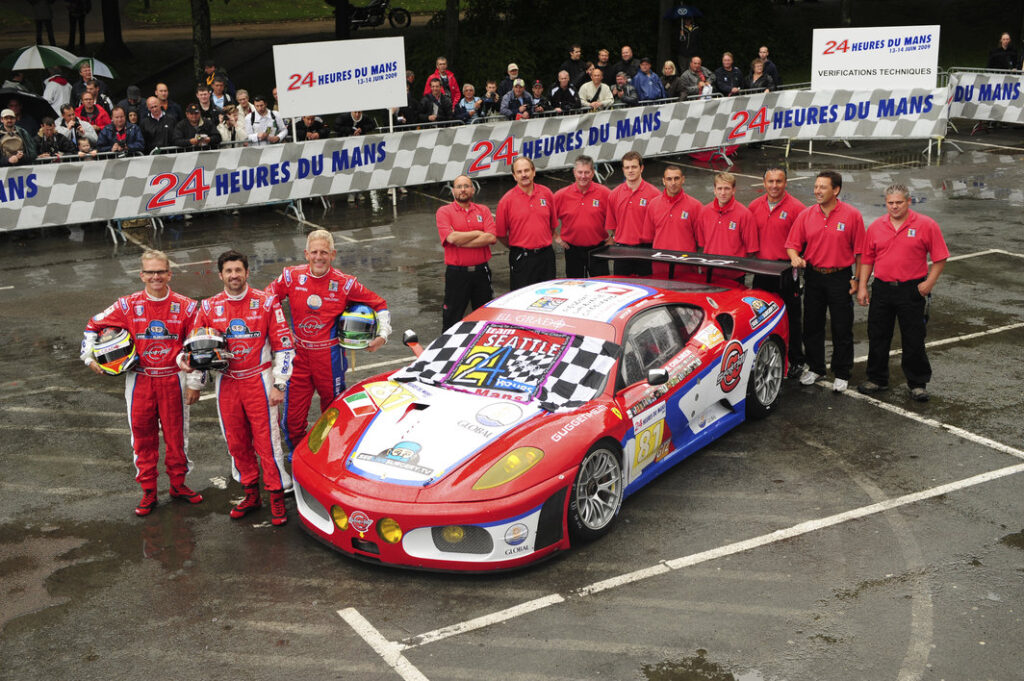
Do you think driving 24 Hours at Le Mans takes perseverance? Consider what it took Don Kitch Jr. and Team Seattle just to get to the starting line.
Every motorsport enthusiast knows it takes a lot of grit to make it through the 24 Hours of Le Mans, the world’s most famous endurance race. But the green flag that started the 2009 race was, in fact, the end of a long road for Don Kitch Jr., ProFormance Racing School’s co-founder and Chief Instructor. Don and his team made it to the finish line in 2009. The accomplishment was the result of years of preparation and effort, with a smattering of luck thrown in.
From Daytona to Le Mans
By 2008, Don had raced the 24 Hours of Daytona 12 times, so he was no stranger to the demands of endurance racing. American drivers rarely go on to Le Mans, since Daytona, the pinnacle of US sports car racing, is considered a worthy life’s goal. But Don Kitch Jr. is different: the world’s most famous sports car endurance race seemed a natural next step for him. Natural or not, he was aware that the step was an enormous and challenging one, both in and out of the car.
The plan takes shape
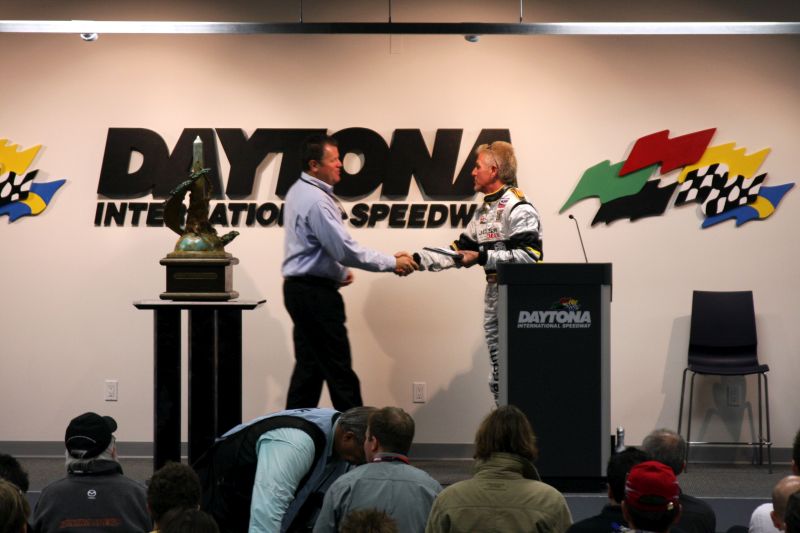
At the 2008 24 Hours of Daytona driver’s meeting, Don announced the team’s intent to enter the race at Le Mans the following year. It was partly the fulfillment of a dream of Don’s, but also part of Team Seattle’s mission to help kids in medical need. At that point, Don’s Team Seattle had raised more than 6 million dollars for Seattle Children’s Hospital.
Don’s friend Patrick Dempsey, race driver and star of Grey’s Anatomy, was interested in the plan and asked to sign on. While he wasn’t a doctor, Patrick played Dr. Derek Shepherd (“Dr. Dreamy”) on TV, and thus seemed a natural fit for an effort benefiting a children’s hospital.
Step one: making connections
Gaining an entry to the 2009 24 Hours of Le Mans would take a year of effort, with numerous financial and political hurdles in the way. Task one: meet the decision makers and others who could steer them through the maze of politics and officials in the sanctioning of the French 24 Hour Classic – the ACO / FIA. That meant flying to Paris as often as possible, sometimes leaving on a Friday and returning Sunday, and hiring a French consultant familiar with the race and its gatekeepers.
One advantage Team Seattle had was their singular purpose: none of the other applicants were raising money for charity. That intrigued the Le Mans officials.
The hurdles
Fifty-five teams are granted entry to the 24 Hours of Le Mans. Many are prominent factory teams or teams with notable racing accomplishments. Others are admitted based on winning major championships in WEC in Europe or IMSA in the USA. Two European bodies, the ACO and the FIA, consider all applicants.
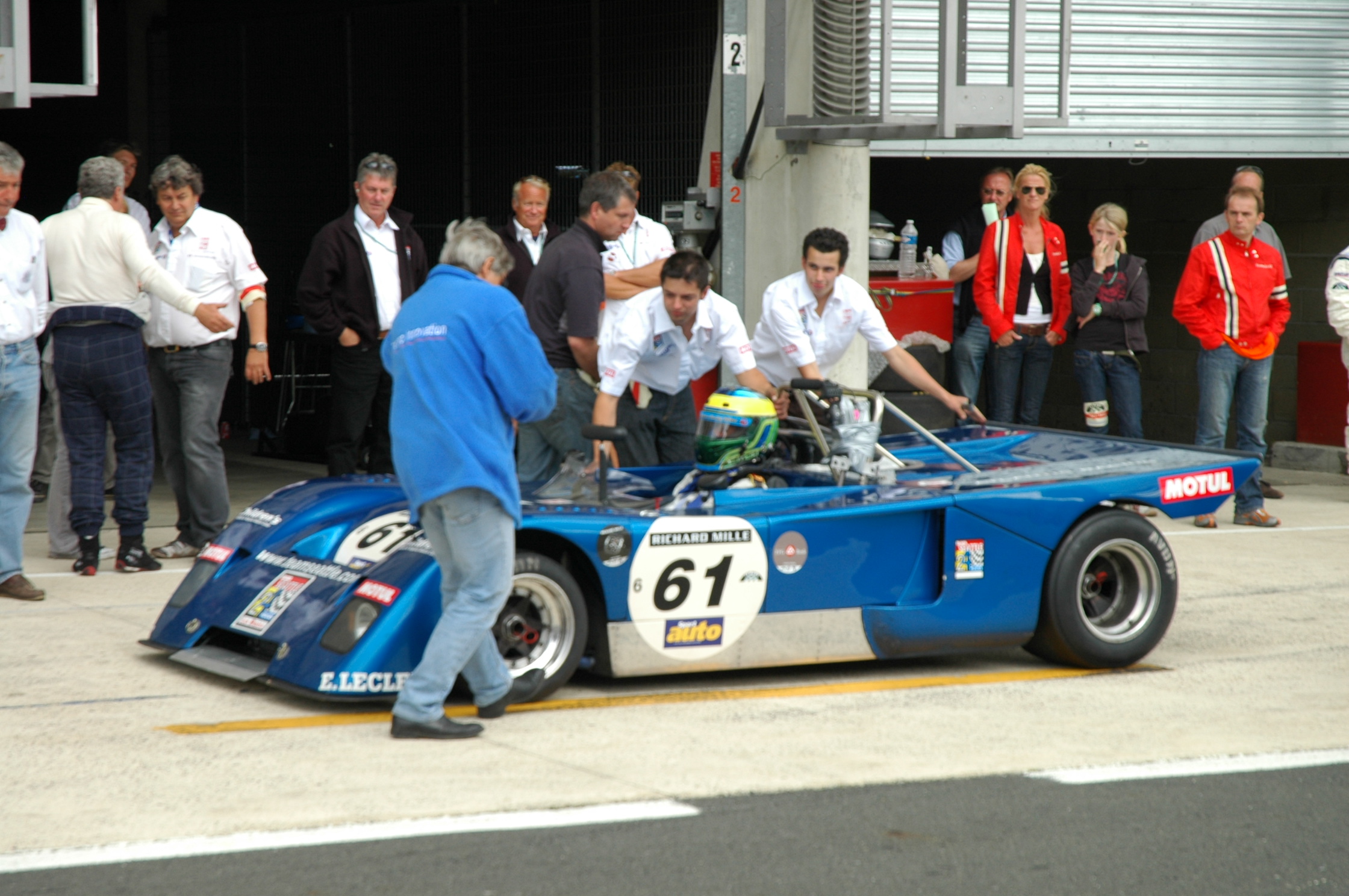
Gaining entry does not mean that you’re automatically in the race. After being invited, teams must still go through pre-race qualifying rounds before rolling onto the grid.
“It was a moonshot,” says Donna Porada-Kitch, Chief Admin at ProFormance Racing School and the one in charge of team logistics for the race effort. “We had three rookies, all Americans. We had no idea if we’d qualify.” The consultant stressed the importance of knowing the Le Mans circuit, so Don and fellow driver Chris Pallis entered the 2008 Le Mans Classic to get familiar with the challenging 8.4-mile circuit. Ross Bentley played a supporting role as coach for the historic vintage sports car event, in which Don drove a vintage Chevron B35 Prototype.
Racing is child’s play
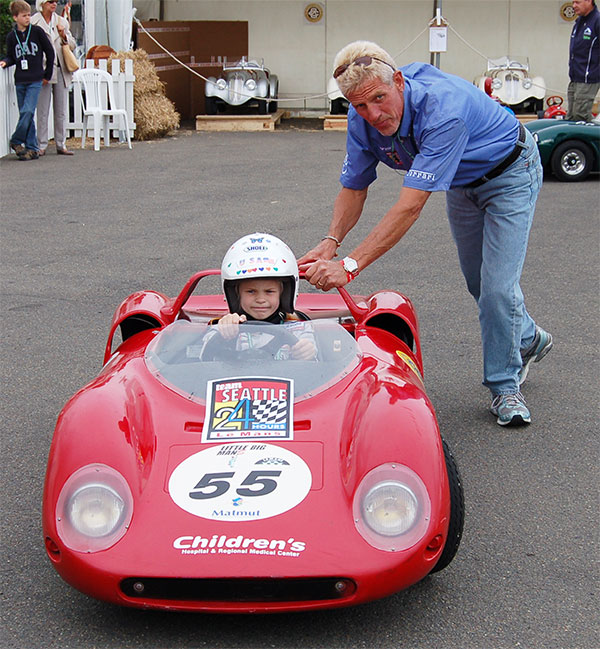
ProFormance has always been a family operation at its core. An added attraction of Don’s participation in the 2008 Le Mans Classic was the opportunity for his daughter Siena to enter Little Big Mans, a renowned motorsports event for pint-sized drivers. Six-year-old Siena Kitch and the other drivers piloted scaled-down race cars on the famous Bugatti Circuit.
Siena admitted to being nervous, as she was the youngest driver there. But her desire to excel won out, and she kept her foot on the gas and made her parents proud.
Some seventeen years later, Siena would obtain her racing license and carry on the family tradition.
Getting the team in place
In late 2008, the search began for a team that could bring Don and his fellow drivers to Le Mans. The Amato Ferrari Corse team was chosen, thanks to good chemistry: Don and Patrick hit it off with Amato Ferrari (no relation to Enzo — Ferrari is a common Italian name!), and it became obvious that the match was perfect.
Slow road to a fast race
It takes more than drivers and a racing team to get to Le Mans: remember all those gatekeepers. After shaking hands on the deal, the group hopped over to France to find out how their application was coming along. “There was no confirmation,” Donna says, “but we got an invitation to join them at a WEC race at Laguna Seca. That’s how it’s done in France: slowly, in baby steps.”
In early 2009, Don travelled to Laguna Seca to meet once again with ACO officials. The meeting was short and ended simply with the comment, “It’s LeMans; it’s very special…We will see.” Not very encouraging, but not a rejection either.
Chasing $ponsorship
Meanwhile, down payments were required, so the sponsorship search continued. The ailing 2008 economy made that a challenge. The market was down, and the dollar was weak at that point, and sponsors were backing out. “It was the worst time ever to ask for money,” says Don.
Some encouragement came from Amato Ferrari in December. He told Don, “This is the holiday season. Enjoy your family. Your reputation in the racing industry is well known; we will get through this together.”
Fortunately, they were able to find the partnerships and sponsorships needed to bring the team across the ocean.
Which didn’t mean they were admitted to Le Mans. That decision remained with the authorities in France.
Made it
At midnight one night in early Spring of 2009, Don and Donna watched online as the 55 official successful entries were announced. The suspense couldn’t have been greater—Don’s team was number 55! Don and Donna’s Team Seattle were in.
There was still much to do. In April, Don returned to Le Mans to practice on the Bugatti circuit (different from the main Le Mans circuit, but still worthwhile) and to be fitted for the Ferrari 430 that he’d be racing in a couple of months.
Christophe, Team Seattle’s French consultant, advised them that partnering with a local charitable concern would be a boon. Team Seattle chose Mécénat Chirurgie Cardiaque, a charitable organization that provides free medical care for children with cardiovascular challenges throughout France. This partnership with Le Mans still exists today.
Friends step up
At a critical time in the search for financial support, Don and Donna’s good friend and Children’s Hospital supporter, Steve Rimmer, and his wife, Leslie Decker, asked how the project was going. Their question: “Would this be good for Seattle and Seattle Children’s Hospital?” The answer was “yes,” if they could get funds and make it all the way to Le Mans. Steve and Leslie agreed to a major sponsorship plan through Guggenheim Aviation Partners.
Additionally, Team Seattle had the support of John and Geri Graham of Global Diving & Salvage. This additional major sponsorship made a dream a reality.
Arrival in France
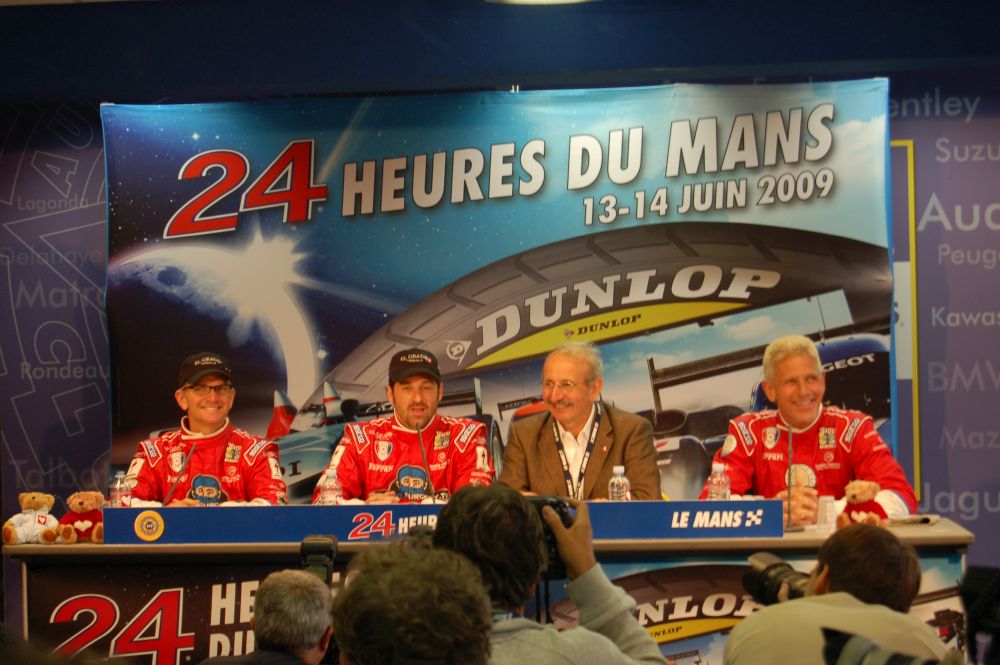
Le Mans is different from Daytona. While Daytona allows four drivers to participate on a team, Le Mans only allows three. So each driver averages a third of the race: eight hours of driving!
All drivers at Le Mans have to qualify before they’re allowed to compete. Don had driven the circuit, but his teammates, Patrick Dempsey and Joe Foster, had not. One can imagine the stress of getting this far with more than 60 sponsors and supporters who followed the team to France, and not making the grade during the trials!
Ready to roll
As it turned out, Don, Patrick, and Joe in the end all qualified, and the stage was set for Team Seattle to race at the 24 Hours of Le Mans for the first time ever. Our next post will cover how Team Seattle’s first venture at Le Mans went and the aftermath.